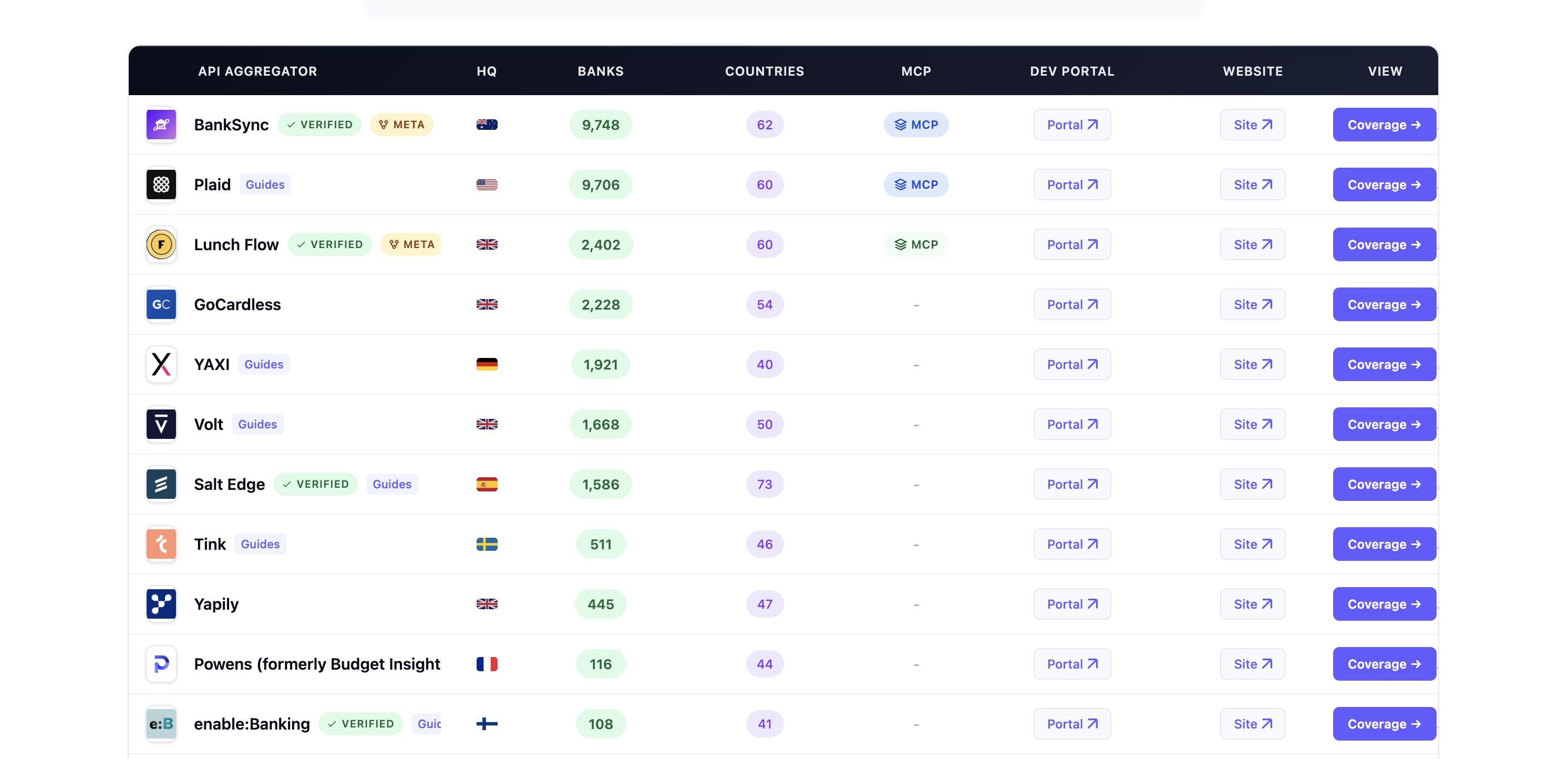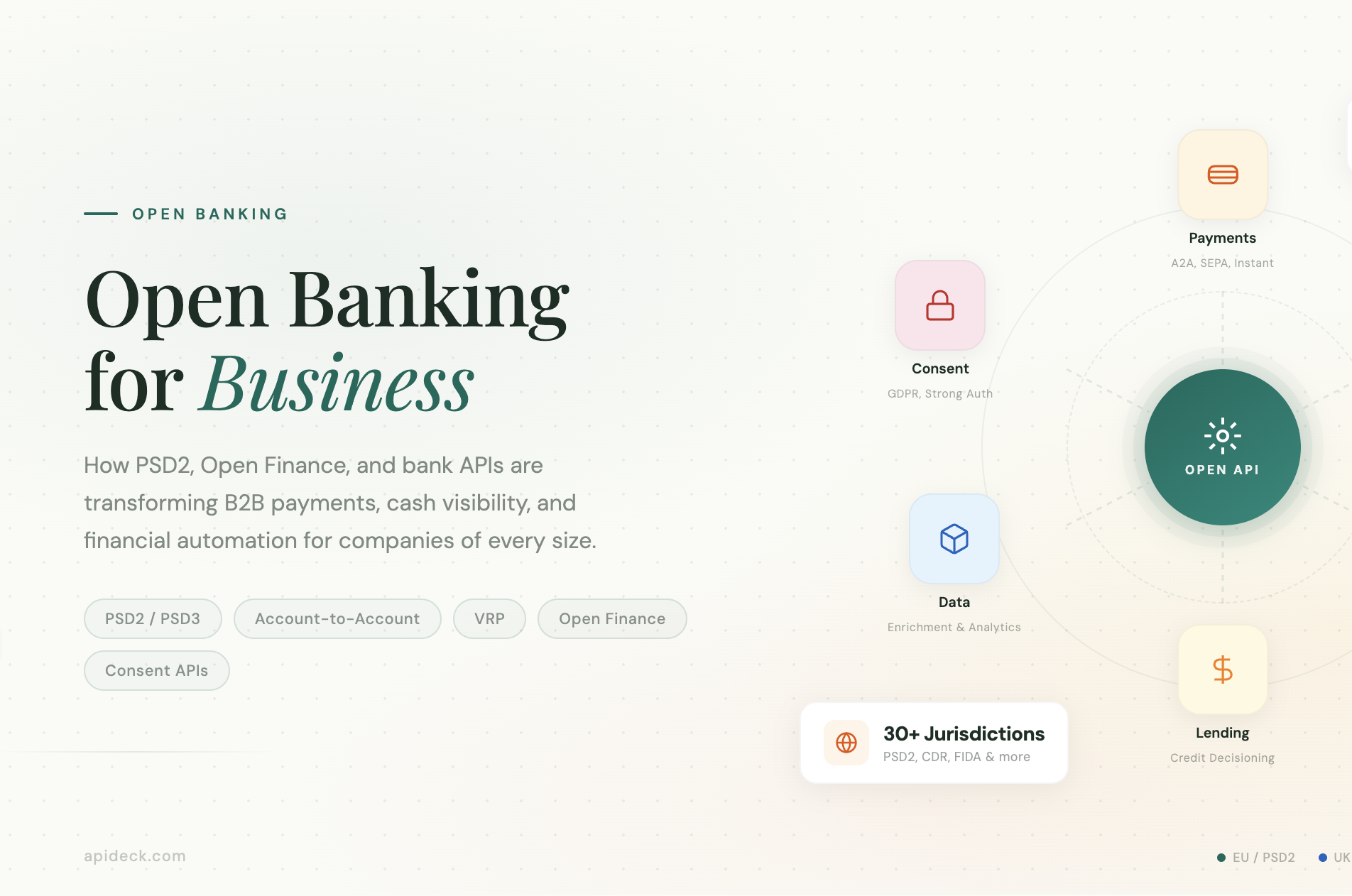
Improved cash flow management through real-time data, more efficient financial operations via automation, access to a wider range of tailored products and services, and better customer experiences—these are some of the main benefits of open banking for business. The concept has gained strong traction in Europe over the past decade and continues to evolve globally in ways that benefit both businesses and consumers.
Here we look at what open banking is, how it works, the current market and regulatory landscape, concrete business use cases, and six directions for its future. This summary draws on industry research and perspectives such as those shared by Juni’s CFO Ruben Arnbert on the future of open banking for business.
What is open banking?
Open banking is a secure way to connect a bank account with another account or platform. It lets you move money across different services and aggregate information from multiple accounts in one place.
A typical example is connecting your primary bank account with business accounts at a provider like Juni or another fintech. As Ruben Arnbert puts it:
"At its core, open banking gives businesses wider and deeper access to financial data and services. Above all it fosters competition among financial service providers, leading to better offerings and potentially lower costs for businesses."
How does it work?
In practice, open banking relies on open APIs. You set permissions in your online banking environment to decide which other platforms can connect, so you control what software or institutions can access your data.
"It allows businesses to initiate payments and financial activities outside of their bank," says Ruben. "This enables everything from paying a cab ride through your phone to building deep analytics platforms for specialised purposes."
State of the market: growth and adoption
The open banking market has moved well beyond early pilot stage. Current estimates put the global market in the range of roughly USD 23–32 billion in 2024–2025, with projections to around USD 46–142 billion by 2030 depending on scope and region, implying compound annual growth in the mid-teens to high twenties. Key drivers include regulatory frameworks (such as PSD2 in Europe) that require or encourage banks to expose APIs, and rising demand for personalised, data-driven financial services—with over 65% of financial institutions reported to be implementing open APIs and around 55% of consumers willing to share financial data for personalised offerings.
Regional picture:
- Europe holds a significant share of the market (often cited around 35%), supported by strong regulation and mature open banking ecosystems.
- North America remains one of the largest markets, with the US seeing mobile banking usage rise by over 45% in recent years, partly enabled by open banking–style features. In 2023, 16 million consumers used the FDX API in the US.
- Asia–Pacific is frequently cited as the fastest-growing region, with multiple countries rolling out data-sharing and open banking initiatives.
Cloud-based deployments account for a large portion of implementations (often over 50%), reflecting the shift toward API-first, scalable infrastructure.
Regulatory landscape: a global patchwork
Open banking is increasingly shaped by regulation, which varies by country but is converging around secure data access, consumer control, and third-party access to accounts and payments.
- European Union: The Payment Services Directive 2 (PSD2) laid the foundation, giving customers the right to authorise third parties to access account information (AIS) and initiate payments (PIS). In June 2024, the European Commission’s Financial Data Access (FIDA) regulation set rules for accessing, sharing, and using customer financial data and strengthening consumer control. PSD3 is scheduled for 2026, with expectations of more standardised open banking processes and updated Strong Customer Authentication (SCA) rules.
- United Kingdom: The UK’s open banking regime builds on PSD2 and the Competition and Markets Authority (CMA) order requiring nine major banks (CMA9) to provide standardised APIs. The Financial Conduct Authority (FCA) regulates the sector; in September 2024 the CMA confirmed full completion of its Open Banking Roadmap. The Open Finance Taskforce was established in April 2024 to design a broader regime for financial data sharing based on fairness, partnership, and safety.
- United States: In October 2024, the Consumer Financial Protection Bureau (CFPB) finalised open banking rules to facilitate consumer data sharing between financial institutions and fintechs, with the aim of boosting competition and data portability.
- Australia: The Consumer Data Right (CDR) gives consumers the right to direct their data to accredited third parties. Open banking was the first CDR sector (from July 2020), starting with the four major banks and expanding to more institutions; data is shared via standardised APIs between data holders and accredited recipients.
By 2024, around 60 jurisdictions had implemented or were implementing open banking–style rules, indicating accelerating global momentum.
How businesses use open banking today
Real-world adoption shows open banking is already central for many organisations. In one 2024 B2B survey, 85% of respondents said they were actively using open banking, and 92% agreed it was essential for future-proofing their organisations. Businesses also report tangible benefits: 64% said open banking had improved profitability and 63% reported revenue improvements, with time savings and convenience ranking as the top drivers.
Concrete use cases include:
- SME lending: Lenders use live transaction data (with consent) instead of PDFs or stale credit files, enabling faster credit decisions—often in hours rather than days—automated income and affordability checks, and better handling of “no-file” and “thin-file” borrowers. Pay-by-bank repayment options and reduced manual document uploads streamline the journey.
- Accounting and bookkeeping: Platforms use open banking to eliminate manual reconciliation via live bank feeds from multiple accounts, speed up onboarding with real-time verification, and offer payment initiation for invoices and tax payments. Cash flow forecasting and other value-added services sit on top of this data.
- Cash flow and late payments: Businesses get real-time visibility of balances and flows across institutions. Open banking supports automated invoicing, payment collection, and reconciliation, and helps SMEs tackle late payment challenges through better tracking and collection processes.
These applications point to a broader trend: open banking is moving from “nice to have” to core infrastructure for financial operations.
The future of open banking: six predictions for businesses
Beyond current adoption, here are six ways open banking is likely to evolve for businesses.
1. Diverse applications and use cases
Open banking is likely to spread beyond core banking and payments into insurance, advisory, investments, and other parts of the financial ecosystem. With more use cases, businesses can keep accounts better integrated and get a clearer picture of their finances, supporting financial health and automation of key processes. The line between open banking (account and payment data) and open finance (broader data such as mortgages, pensions, insurance, investments) is already blurring: 43 countries were reported to be expanding into broader open finance solutions in 2024, and some projections suggest one billion open finance users by 2030 across dozens of countries. In 2024 there were nearly 1,000 open banking–style products worldwide, with a strong focus on loans and lending.
2. Greater need for transparency and controls
More usage will increase demand for stricter data governance, controls, and transparency about what data is shared and with whom. Expect a stronger focus on cybersecurity and governance to protect sensitive financial data, and a need for data anonymisation and clear controls so businesses avoid sharing sensitive information with competitors. Regulations like FIDA and the CFPB rules are already pushing in this direction.
3. More integrations, specialisation and customisation
As use cases grow, integration and customisation will improve. Users will be able to tailor open banking solutions to their needs, and ecosystems will become more specialised—for example, cash flow management built for a specific industry or region rather than a one-size-fits-all global product.
4. Enhanced innovation and productivity
Open banking can help businesses focus more on analytics and action instead of manually gathering and organising data. Combined with AI, it has the potential to raise productivity and reduce manual work. It also enables new applications built on financial data, helping organisations become more data-driven and efficient.
5. Improved consumer and business trust
Because open banking involves sharing sensitive financial data, trust has been a concern. Adoption is still uneven: in the UK, 14% of digitally active banking customers used open banking as of early 2024 (up from 11% in mid-2023), while in the US 46% of consumers said they were ready for it but only 11% had used it in the past year. Trust remains a barrier: a majority of non-users cite trust or lack of familiarity, and in the UK 84% of consumers have expressed distrust in open banking’s safety. At the same time, 66% of consumers say they trust sharing financial data with banks, and 57% of Americans trust financial institutions to protect their data—suggesting that trust is higher when familiar institutions are involved. Younger users are more receptive: 72% of Gen Z and 66% of millennials showed high enthusiasm for open banking payments in one US study, versus 22% of baby boomers. As awareness and positive experiences grow, acceptance and trust are likely to increase, similar to how public perception of AI has shifted.
6. Increased use of AI
AI is expected to be increasingly integrated into open banking. Use cases include large language models (LLMs) interpreting financial data to support decision-making and user experience, and AI agents that can query live bank data (e.g. via protocols like the Model Context Protocol) for categorised transactions, cash flow analyses, and contract data—enabling chatbots and assistants to act on real-time financial information. Open-source and commercial platforms are emerging that combine LLMs with open banking APIs for tasks such as financial analysis and natural-language discovery of APIs, while techniques like code execution are being used to reduce token usage and context overload. AI can also streamline processes, personalise services, and strengthen security (e.g. fraud detection and prevention).
Summary: more dynamic and secure financial operations
Open banking is set to keep evolving through more diverse use cases, broader open finance expansion, better transparency and control, improved integrations, more specialisation, higher productivity, gradual gains in trust, and deeper use of AI. For businesses, that can mean less manual admin, better financial analytics and insights, and faster, more informed decisions.
It’s worth reviewing how your current tools use open banking and what any new solutions you adopt offer in terms of connectivity, data access, security, and compliance with local regulation.
Frequently asked questions
What is open banking?
Open banking is a secure way to connect a bank account with another account or platform. It lets you move money across different services and aggregate information from multiple accounts in one place.
How does open banking work for businesses?
Open banking relies on open APIs. Businesses set permissions in their banking environment to decide which platforms can connect, enabling payment initiation, financial activities outside the bank, and aggregation of data from multiple accounts.
What are the main open banking use cases for business?
Key use cases include SME lending (faster credit decisions with live transaction data), accounting and bookkeeping (live bank feeds, reconciliation, payment initiation), and cash flow management (real-time visibility, automated invoicing and collection).
Which regulations govern open banking?
In the EU, PSD2 and FIDA set the framework; in the UK, the CMA order and FCA regulate open banking; in the US, the CFPB has finalised open banking rules; Australia has the Consumer Data Right (CDR). Many other jurisdictions have or are implementing similar rules.
What is the future of open banking for business?
Trends include broader open finance expansion, more diverse use cases (insurance, investments), stronger transparency and data controls, better integrations and specialisation, productivity gains with AI, and gradual growth in trust and adoption.
This post summarises and adapts themes from Juni’s article on the future of open banking for business and draws on market and regulatory research from sources including Mordor Intelligence, Fortune Business Insights, Grand View Research, the UK FCA/CMA, the CFPB, Fiskil, TrueLayer, Mastercard Open Banking, PYMNTS, Finexer, Open Banking UK, and the Cambridge Centre for Alternative Finance.